
Robo Defense
Lupis Labs SoftwareArcade
3.710.46K Reviews
- Version
- Varies With Device
- Installs
- 500.00K
- Age Rating
- Everyone 10+
Screenshots
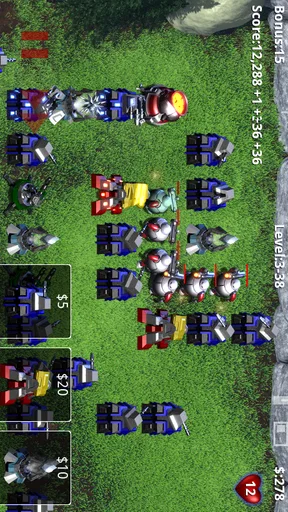
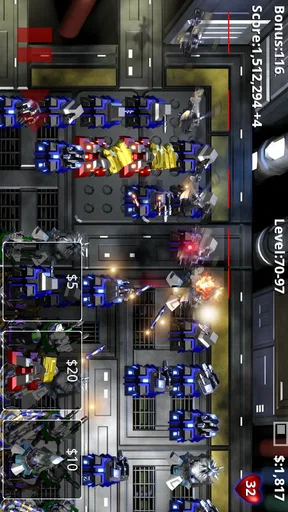
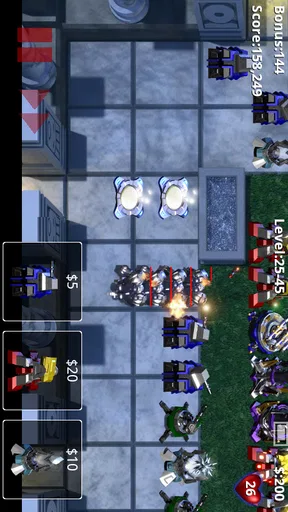
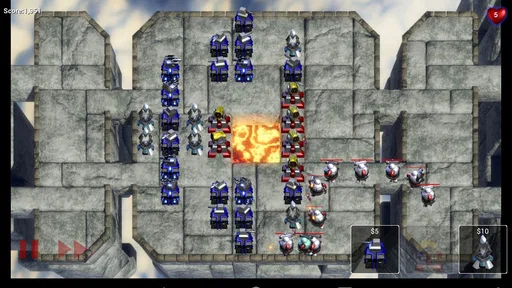
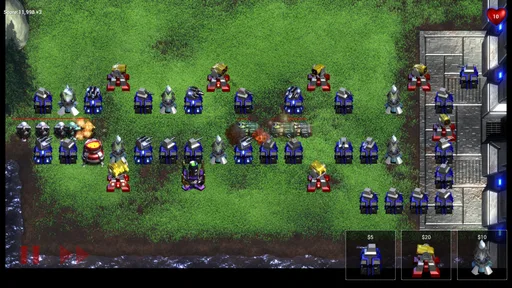
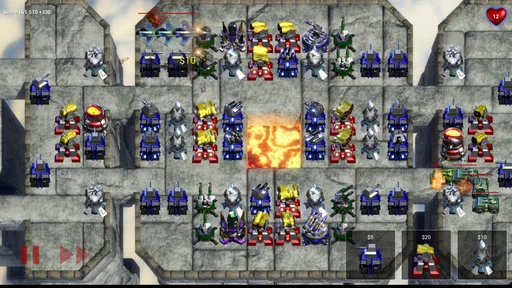
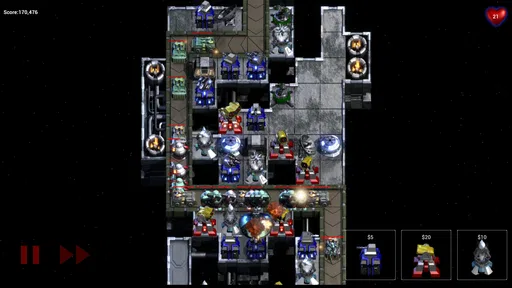
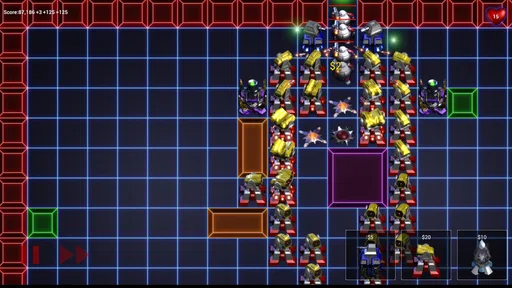
Our Review of Robo Defense
 Analysis by Appyee
I like tower defense games that are easy to understand but still give me a reason to rethink my next move. Robo Defense, an arcade game from Lupis Labs Software, aims at that portable, pick-up-and-play style. Its basic appeal is clear: place defenses, stop incoming enemies, and adjust your plan when a straightforward setup is no longer enough.
That simplicity is also the key to deciding whether it belongs on your phone. I would not choose it because I wanted a story-heavy strategy game, a social competition, or a technically elaborate showcase. I would choose it for short sessions built around positioning, timing, and the satisfaction of improving a defensive layout. The game has a 3.7 average from around 66 thousand ratings, with roughly 10 thousand written reviews and more than 500 thousand installs, so it has attracted a sizeable audience without looking universally loved.
It costs $2.99 and carries an Everyone 10+ rating. That makes the decision fairly direct: you pay once to try a focused arcade tower-defense experience, rather than treating it as a free download whose value depends on a long-term service model. For me, the important question is not whether it is the biggest game in its category, but whether its particular kind of replayable defense is a good match for the way you play on a phone.
How I Decide Whether Robo Defense Fits
I use a simple test before making room for another mobile game: does it give me a reason to return once the novelty wears off, or does it only feel appealing on the first few plays? For Robo Defense, I’d look at whether each session leaves me with a useful adjustment to try, rather than just another attempt to repeat. That question also makes it easier to judge whether its focused arcade style suits your routine.
The right expectations before you play
I start by separating three types of tower-defense player. The first wants quick rounds and clear tactical choices. The second wants a large strategic system with extensive progression, a strong theme, and plenty of content to manage. The third mostly wants something relaxing, with little punishment for experimenting. Robo Defense is most naturally aimed at the first group, while the other two may need to be more selective.
The portable format matters here. A phone game has to work when I have only a few minutes, but it should also reward me when I stay longer. Robo Defense makes sense in that space because defensive play is naturally divided into decisions: where to establish control, when to strengthen a position, and when to stop investing in one route. Those decisions give a short session a purpose instead of making it feel like a waiting room between larger activities.
My first practical test for a game like this is whether I can understand a failed attempt. If an enemy gets through and I cannot tell whether my placement, upgrade timing, or overall route planning caused it, restarting feels arbitrary. In Robo Defense, I would approach each loss as a chance to identify one weak point rather than immediately rebuilding everything. That is a useful habit for this genre, especially on a small screen where overcomplicated interfaces can hide the reason a plan broke down.
What matters more than visual spectacle
For this kind of arcade game, I care more about readable action than visual ambition. I want to distinguish threats, see which defensive position is doing useful work, and make a change without losing track of the battlefield. A flashy presentation cannot rescue a defense game that makes its tactical information difficult to read.
That is why I would judge Robo Defense by the quality of its moment-to-moment decisions rather than by whether it resembles a large console strategy title. Its strongest use case is likely a player who enjoys turning a simple layout into a dependable solution. If you prefer games where every session introduces a radically different system, this focused structure may feel narrow instead of satisfying.
A realistic everyday session
Imagine that I am waiting for an appointment and have enough time for one concentrated activity, but not enough attention for a long narrative game. I can open Robo Defense, make an initial defensive plan, watch how the pressure develops, and use the result to adjust my next attempt. If the session ends before I find the answer, I still have a concrete question waiting for me later: should I reinforce the first vulnerable area, spread my resources more evenly, or change the order in which I improve my defenses?
That kind of unfinished tactical problem is a better reason to return than a vague promise of “just one more round.” It also makes the game suitable for players who like puzzles with motion and pressure. I would be less enthusiastic about using it during a moment when I need a completely passive distraction, because tower defense asks me to watch the flow and respond rather than simply tap through a sequence.
Three habits that improve the experience
My first tip is to avoid treating the opening placement as permanent. A defensive structure that looks efficient at the beginning may become a poor investment once the attack pattern changes. I try to identify whether a position is valuable because it covers a genuinely important route or merely because it is convenient to fill early. That distinction prevents me from spending too much of my available strength on a location that only solves the first problem.
Second, I prefer to change one major variable at a time when replaying a difficult stage. If I move every defense and alter every upgrade decision, I may win without learning why. Keeping most of the plan stable lets me compare the result more intelligently. This is a small technique, but it turns repeated attempts into analysis rather than frustration.
Third, I watch for the difference between surviving and being efficient. A layout can hold for a while and still be wasteful, leaving too little flexibility when the pressure increases. When I review a run, I ask where my plan began to lose options. That point is often more useful than the exact moment an enemy finally reaches the objective.
Where the game earns its place
The main strength is concentration. Robo Defense does not need to compete with a sprawling role-playing game to justify itself. It can appeal to someone who wants a compact arcade experience in which placement and timing matter. The familiar tower-defense framework also lowers the learning barrier: if you have played this type of game before, you can focus on the particular balance of its challenges rather than learning an entirely new genre.
I also value the fact that the paid price gives the game a clear position in my library. At $2.99, I am evaluating it as a small purchase, not as a free starting point that may ask for ongoing spending before it becomes enjoyable. That does not automatically make it better, but it makes the ownership decision easier to understand. I can ask whether I want this specific style of play instead of trying to predict how much patience a free model will require.
Another advantage is that the game can serve different levels of attention. I can play casually by making sensible defensive choices, or I can become more deliberate about route coverage and resource use. That flexibility is valuable on mobile, where the same person may want a relaxed session one day and a more demanding tactical challenge the next.
Where the trade-offs become visible
The same focus that helps Robo Defense feel approachable can make it less appealing to players who need variety in every session. If your favorite alternatives are built around extensive character development, competitive rankings, elaborate narratives, or constant new mechanics, a compact arcade defense game may seem limited. I would not buy it expecting the breadth of a much larger strategy package.
There is also a mental cost to replaying. Tower defense is satisfying when a failed attempt teaches me something, but it becomes tiring when I feel I am repeating the same sequence without a meaningful new decision. My advice is to stop after a few unproductive attempts, note the specific weakness, and return with a different plan later. That is not a flaw unique to this title, but it is an important part of deciding whether its loop suits you.
Touch controls can create another point of friction in any mobile defense game. Small targets, crowded layouts, or hurried adjustments can make a good plan harder to execute. I would play with deliberate taps rather than rushing through changes, especially when the action becomes busy. Players who strongly prefer a controller-like feel may find a traditional console or desktop tower-defense option more comfortable.
How it compares with the usual alternatives
Compared with free-to-play tower-defense games, Robo Defense is easier to evaluate as a straightforward purchase. Free alternatives may offer more frequent incentives, events, or long-term systems, but those additions can also distract from the actual defensive puzzle. Here, the attraction is the core arcade activity. If you want a game you can judge on placement and replay value rather than on its surrounding economy, that is a meaningful advantage.
Compared with large strategy games, it asks for less commitment. I do not need to approach it as a campaign that will occupy my attention for weeks. That makes it a better fit for short breaks, though it may not satisfy someone who wants a world to build or a broad roster of systems to master.
Compared with very casual puzzle games, it demands more sustained observation. I cannot always solve a problem with one isolated move; the value of a decision may only become clear as the attack develops. If you want a completely calm experience with no pressure, another puzzle category may be more suitable. If you enjoy watching a plan work—or fail—in stages, Robo Defense has the stronger case.
What switching to it really involves
The cost of switching is not only the purchase price. It is also the time needed to adjust from an alternative that may reward rapid tapping, collection, or constant unlocks. Robo Defense asks me to slow down enough to read the defensive situation. A player coming from a highly automated game may initially find that less exciting, while someone tired of busy menus may appreciate the change.
I would also consider what I am giving up in my current game. If I already have a tower-defense title with a deep progression system and enjoy investing in a long-term account, switching may feel like moving backward in scope. If my current game is crowded with distractions and I mainly want cleaner tactical sessions, the change may feel refreshing.
The sensible approach is to decide based on the loop, not on the label alone. “Tower defense” covers games that feel almost like puzzles, games that behave like strategy campaigns, and games that function as collection systems. Robo Defense belongs in the compact arcade-minded part of that range. That is its identity, and it is also the boundary of its appeal.
Who should install it
I recommend it to players who enjoy planning under pressure, replaying a stage to improve one decision, and keeping a mobile game focused on its central activity. It is especially suitable if you want a paid arcade title that can fit into a short break but still offer enough tactical detail to reward closer attention.
I would also suggest it to someone who is new to tower defense and wants a direct introduction to the basic pleasure of the genre: identifying danger, arranging protection, and learning from a weak setup. The Everyone 10+ rating makes its audience broad, while the simple premise gives newcomers an accessible starting point.
Who should skip it
I would skip it if my main requirement were a rich story, a social community, or a constantly expanding live-service structure. I would also look elsewhere if I disliked repeating attempts or if I wanted every session to feel dramatically different from the last. A larger strategy alternative may be a better purchase for someone who wants extensive progression and a more involved long-term commitment.
Players who find mobile touch interaction uncomfortable should think carefully too. The game’s appeal depends on making timely defensive choices, so control friction can undermine the experience more than it would in a turn-based puzzle. In that situation, a platform with more comfortable input may be preferable, even if the underlying genre is similar.
My recommendation after weighing the trade-offs
Robo Defense is not a universal recommendation, and I think that is useful to say plainly. Its value comes from being a focused arcade tower-defense game rather than from trying to cover every possible strategy preference. I enjoy that kind of clear purpose: the game gives me a defensive problem, lets me test an arrangement, and encourages me to return with a better idea.
The purchase makes the most sense when you want a compact alternative to more demanding strategy games or more distracting free-to-play designs. The $2.99 price is modest, but the real question is whether you will enjoy repeating and refining defensive plans. If that process sounds rewarding, the game has a credible place on your phone. If you want narrative scale, social competition, or a huge progression framework, your money and time will likely be better spent elsewhere.
My final advice is to approach it as a tactical pocket game, not as a complete replacement for every other strategy experience. Give each attempt a purpose, change one important decision at a time, and pay attention to where your layout loses flexibility. Used that way, Robo Defense can turn a short idle moment into a satisfying little exercise in planning. For players who value focused defense over spectacle, it is a sensible recommendation; for everyone else, its narrow focus is the warning sign to notice before buying.
Verdict
Strengths of Robo Defense
- Simple controls make it easy to start playing immediately.
- Many tower types allow for varied defensive strategies.
- Short levels fit well into quick gaming sessions.
- Offline play is useful when you have no internet connection.
- Increasing difficulty keeps the campaign challenging over time.
Limitations of Robo Defense
- The visual presentation feels dated compared with newer tower-defense games.
- Some levels can become repetitive after extended play.
- Later stages may require considerable trial and error.
- The interface can feel cramped on smaller phone screens.
- Limited story content may disappoint players seeking more narrative depth.
Similar Picks in This Category
View All
Subway Surfers
SYBO Games4.6

Stickman Party 234 MiniGames
PlayMax Game Studio4.6

Subway Princess Runner
Ivy4.4

Temple Run
Imangi Studios4.2

Zombie Tsunami
Mobigame SAS4.6

Stack Ball - Crash Platforms
CASUAL AZUR GAMES4.5
Frequently Asked Questions
What is Robo Defense?
Robo Defense is a classic tower defense game in which you protect your base from waves of enemy robots. You place defensive towers along the map, upgrade their abilities, and choose suitable strategies to stop increasingly difficult attacks. Its straightforward controls make it accessible to beginners, while multiple tower types, maps, and difficulty options provide enough variety for players who enjoy planning and replaying levels.
Is Robo Defense free to download and play?
Robo Defense can generally be downloaded and played for free, although the exact availability of features may depend on the version and platform. Some editions may include advertising, optional purchases, or premium content. Before installing, check the official store listing for the current pricing, in-app purchase information, supported devices, and whether the version you choose includes the complete set of maps and gameplay features.
Does Robo Defense work offline?
Robo Defense is primarily a single-player strategy game, so its core tower defense gameplay can usually be enjoyed without a continuous internet connection. This is useful when traveling or playing in places with limited service. However, an internet connection may still be required for downloading the game, displaying advertisements, restoring purchases, checking updates, or accessing platform-related services.
What devices are compatible with Robo Defense?
Compatibility depends on the specific Robo Defense release and the operating system of your device. Before downloading, review the official Google Play or App Store listing to confirm the required Android or iOS version, available storage, and device support. Older phones may run the game successfully, but performance can vary, particularly during busy waves with many enemies and defensive effects on screen.
Is Robo Defense suitable for children and casual players?
Robo Defense is generally suitable for players who enjoy strategy, planning, and non-violent arcade-style gameplay involving robots rather than realistic combat. The basic mechanics are easy to understand, but later stages can become challenging and may require patience, experimentation, and careful resource management. Parents should still review the store rating, advertising, and any in-app purchase options before allowing children to play.
Play our best games!


